03Digital Platform
KEEP
The Zookeeper Exchange Programme, run as one platform.
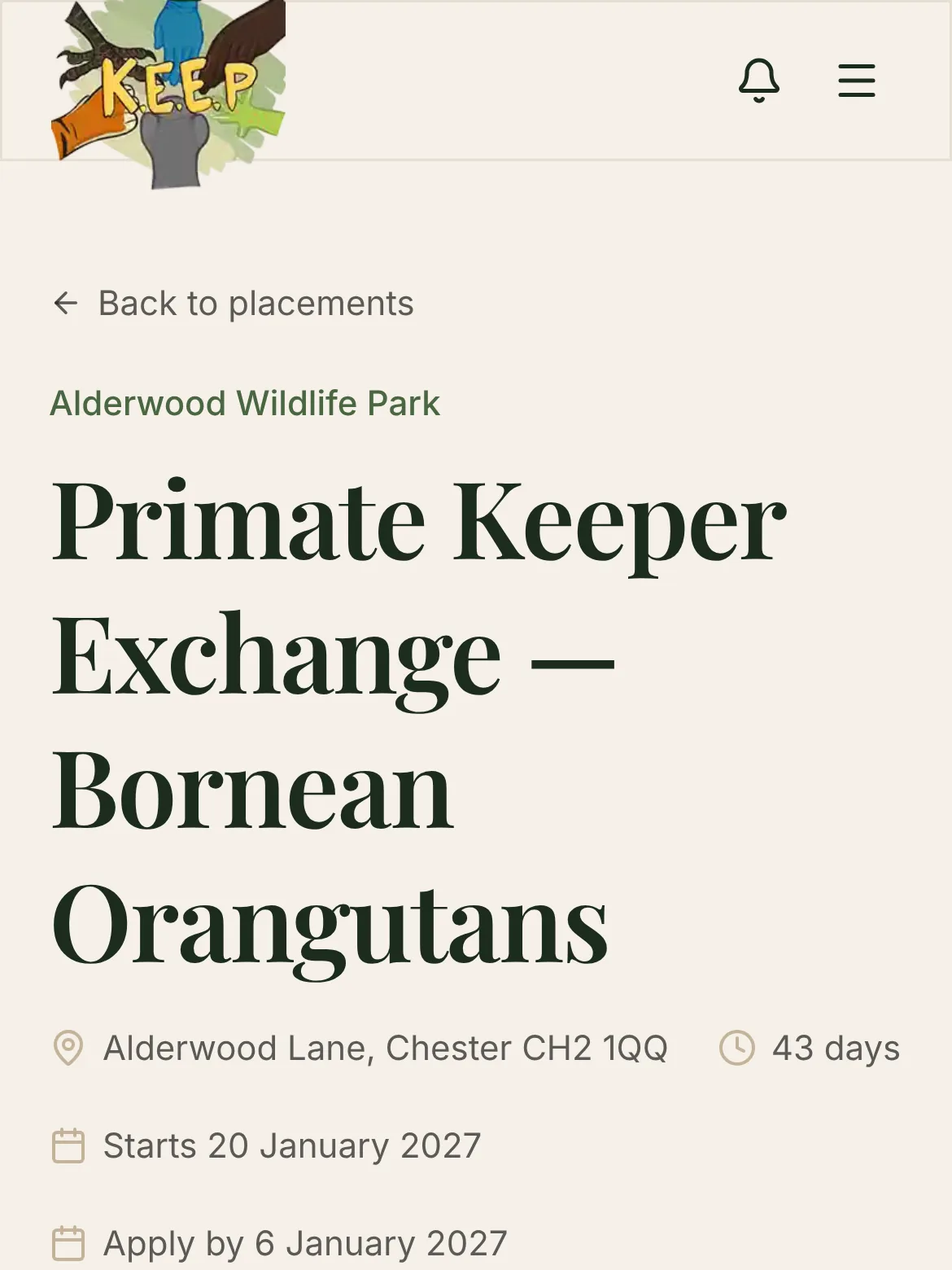
A public website, a placement board and the system behind the exchanges — connecting zookeepers with animal collections around the world, built as one platform.
- Capabilities
- Multi-role platform
- Multi-tenant
- Application workflow
- Notifications
- Bespoke CMS
- Security audit
- Technology
- Next.js
- TypeScript
- Supabase
- PostgreSQL
- Row Level Security
- Vercel
A website that became a platform.
The problem
Exchanges between zoos were being run the way most of them still are — an opportunity posted somewhere, a flurry of email, a spreadsheet, and keepers’ personal information scattered across inboxes. It works until it grows, and then it does not work at all.
The idea
Treat the whole thing as one system rather than a website with an email address on it. If a placement, an application, a conversation and a decision all live in the same place, nobody has to reconcile four versions of the truth, and keepers stop wondering whether they were forgotten.
What we built
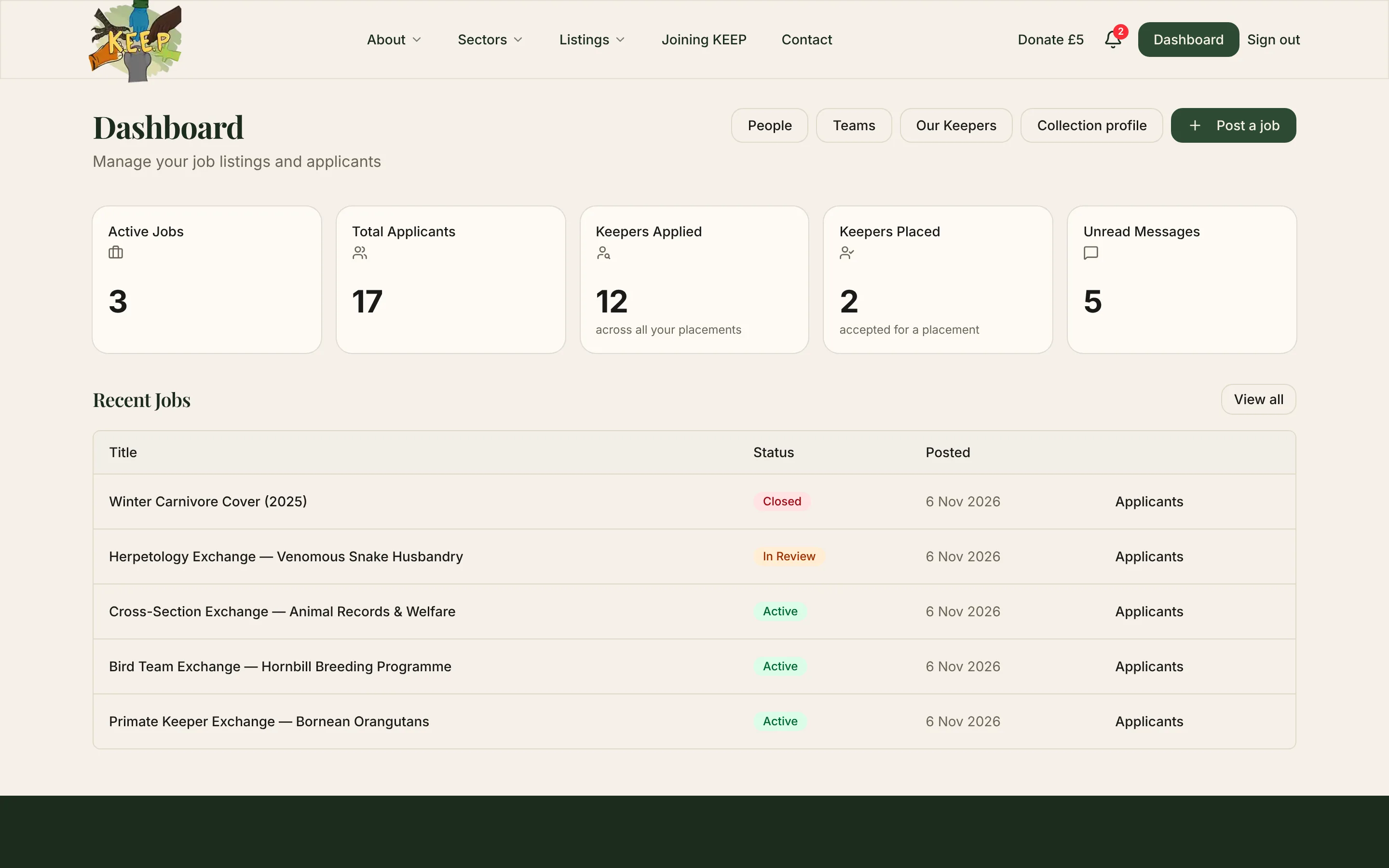
A public site, a placement board, keeper and collection accounts, an application system, the exchange record and an administration area with its own CMS — designed together and built as a single platform. Each part assumes the others exist, which is what makes it feel like one product rather than a website with tools bolted on.
How it works
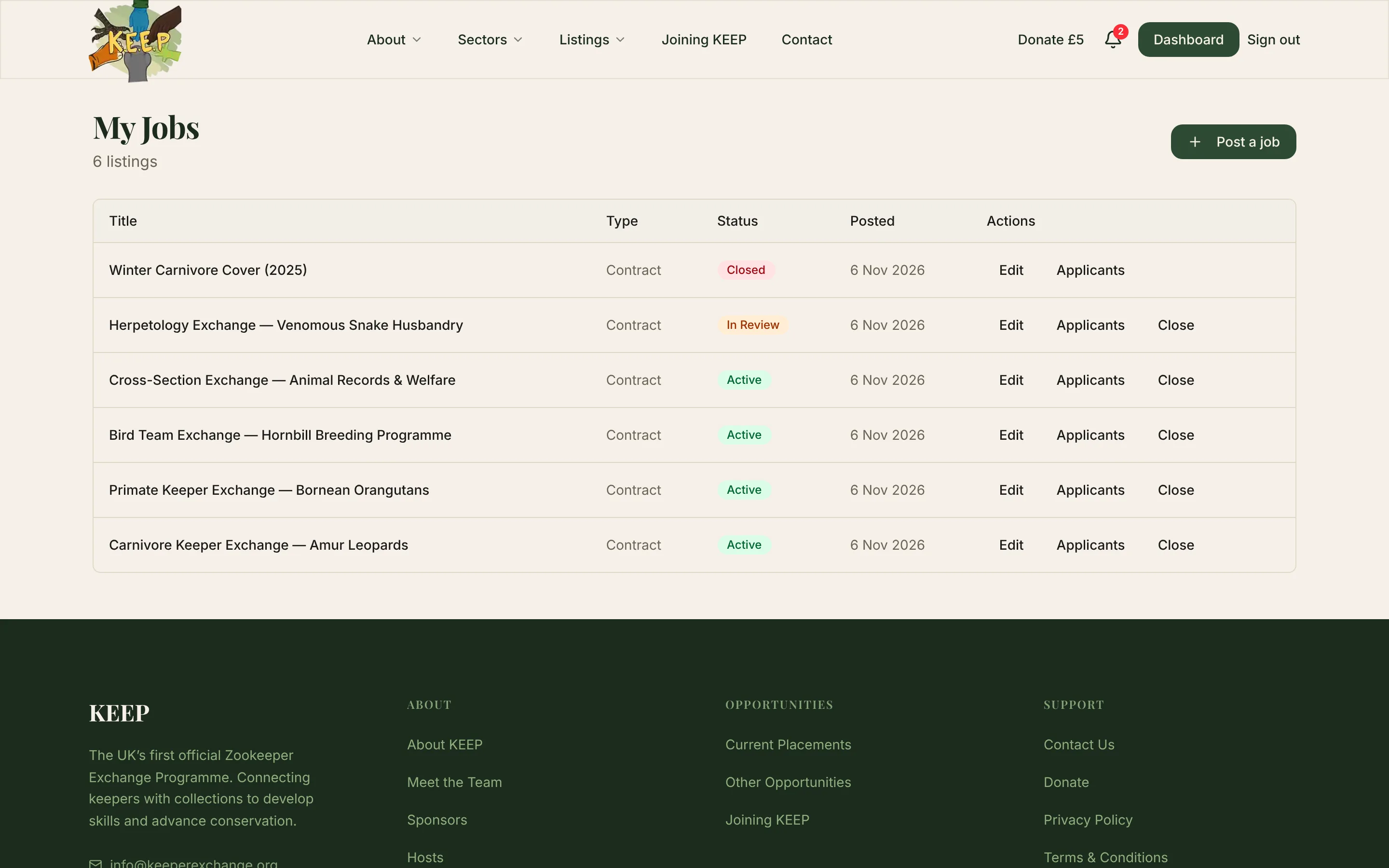
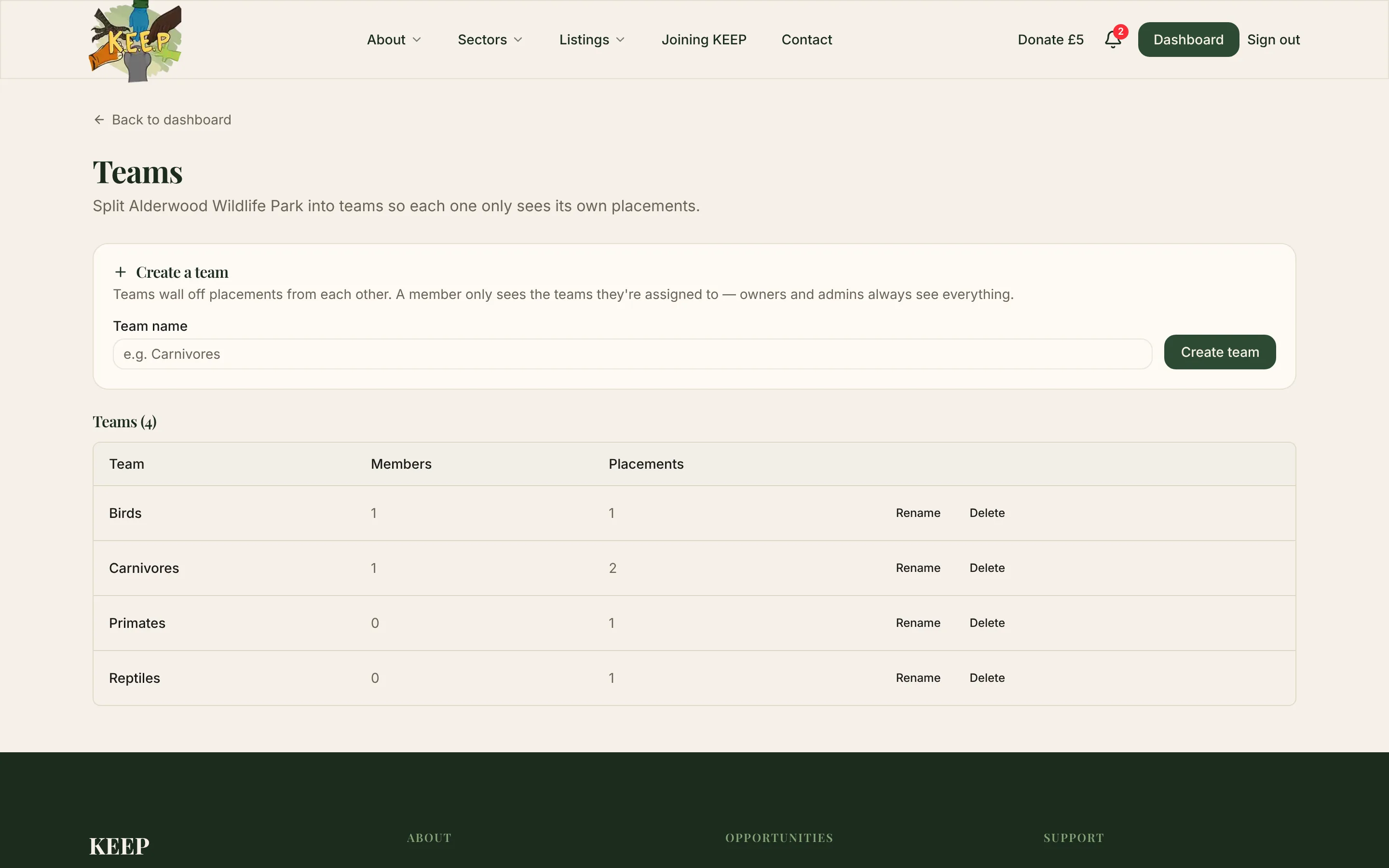
A collection posts a placement. Keepers, once verified, browse and apply, and are kept informed as their application moves. Collection members work inside the teams they belong to, the KEEP team runs the programme from an administration area built for the way it actually works, and personal information stays inside the platform throughout. Access is enforced by the database on every request, not by which buttons are showing.
Key functionality
01
Placement board
Collections post exchange placements; keepers browse them and apply from anywhere in the world.
02
Keeper profiles & CVs
Each keeper keeps their experience, availability and CV in one profile, verified by the KEEP team before they can apply.
03
Collections & teams
Zoos and aquariums manage their own placements, members and teams, with each member seeing only the parts of the collection they work in.
04
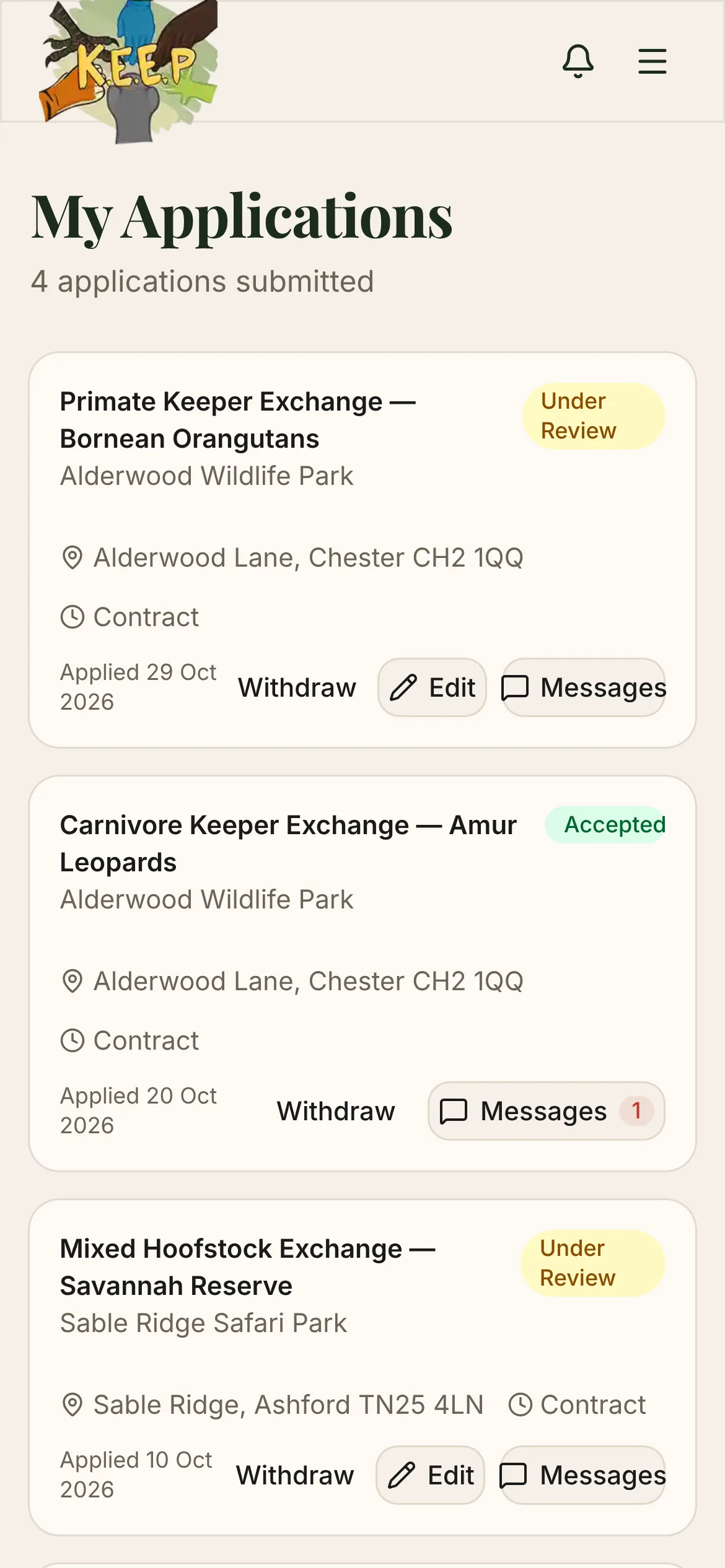
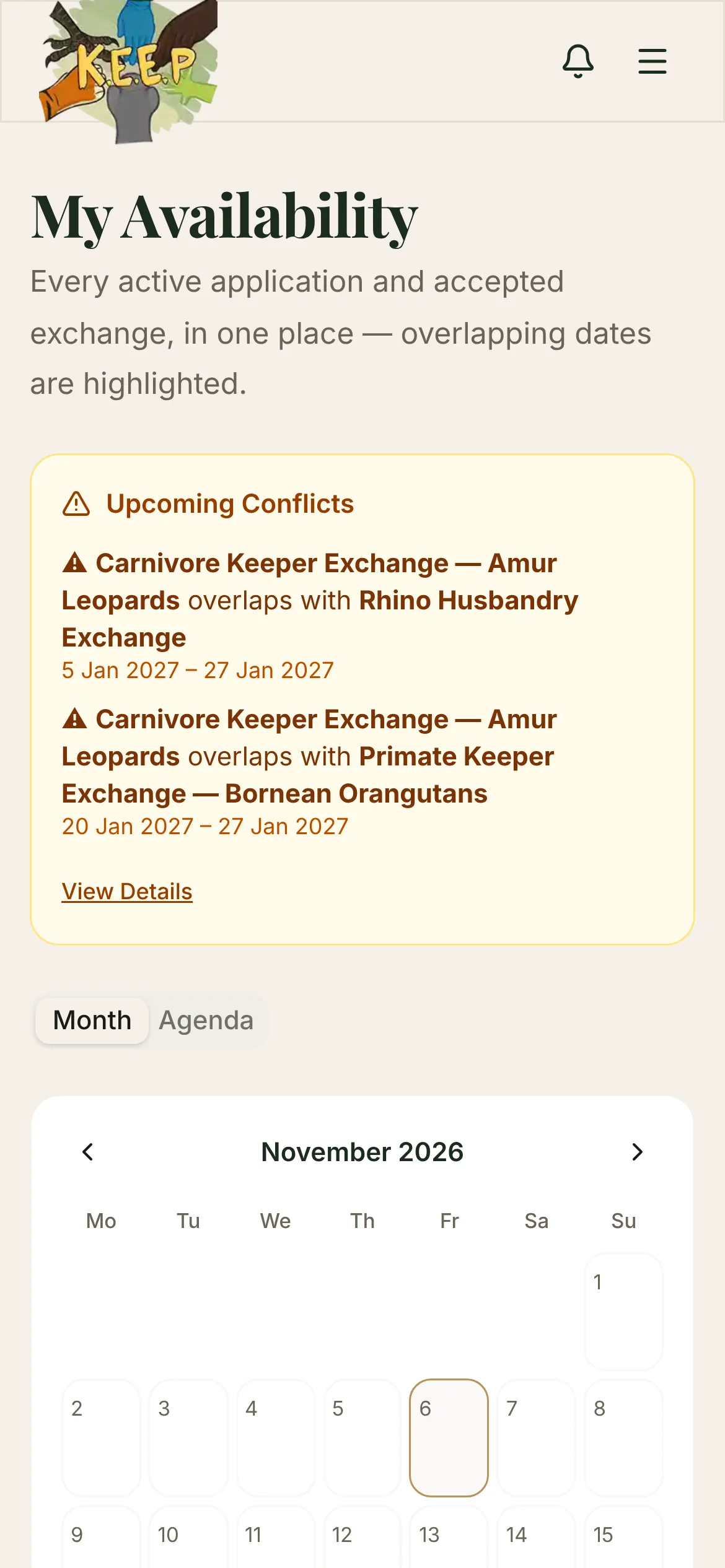
Applications without the inbox
Every application moves through clear stages with notifications at each step — and a clash is raised the moment a keeper accepts two placements that overlap.
05
The exchange record
Every exchange the programme has run, in one list: the history imported from the spreadsheets that came before, alongside those arranged on the platform.
06
A CMS the team owns
Pages, navigation, partners, sponsors, the newsletter and follow-up surveys, all managed by the KEEP team without touching the technology behind them.
Why it matters
The programme keeps control of its own data and its own process, and the keepers applying can see where they stand. Because it was built as a platform rather than a page, the next capability is a feature rather than another system to reconcile.
Audited before it was trusted
A platform holding keepers’ CVs and contact details is only as good as its permissions, so before launch we audited it in five layers: every route checked for authorisation, every server component checked for leaks across the boundary, and every one of 111 routes requested as each of six different identities — anonymous, keepers, two separate collections, a team-scoped member and an administrator. Cross-tenant and privilege-escalation attempts went straight at the database. Everything found was fixed and re-verified, and the database was restored exactly afterwards.
Next project
StableMate